
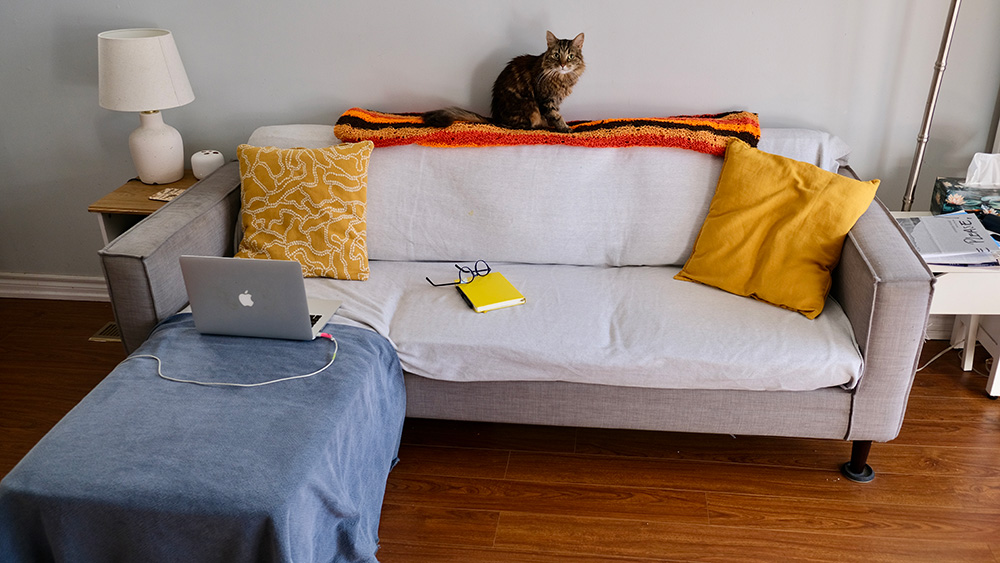
My studio is a couch. This couch isn’t particularly fancy or even that comfortable. It was a few hundred bucks, several years ago, and I assembled it at home. It is the most heavily used piece of furniture in my house.
My youngest son uses it as a trampoline and my eldest son sprawls across it while staring into his phone. My wife sometimes makes it her workstation. My elderly cat sleeps on it for hours at a time.
We cover the couch in thick blankets to preemptively soak up the many spills it endures week after week. On nights when I’m not putting anyone to bed, after I’ve cleaned up the kitchen and done the dishes, I collapse into its worn cushions with my 15-year-old Macbook and open a Word file. There, once everything is quiet in the house and I have no more tasks to pull at my attention, I will try to knit together a few coherent thoughts for a story I’m working on.
This is pretty much how I finished writing Terminal Solstice.
I have written in cafes and bars, on back porches and in cottages. I have owned nicer desks and faster computers. But this resilient little couch is the key to my creative productivity in recent years.
I’m a creature of many habits. I like routines. Whenever I relocate to another corner of the house to write, I spend too much time getting settled—and I can’t afford to waste the few precious moments I have for writing. Late at night in my living room, I have all I need to work: shelves of books that remind me to finish what I start; stacks of DVDs and Blurays that I put on to fill the room with chatter I can ignore; my choice of noise-cancelling headphones or a turntable and sound system; and, of course, a nearby kitchen filled with snacks.
In my studio, snacks are almost as important as the couch.
Books by Sean Minogue

 Turnstone Press Ltd.


